In pro Valorant, winning is all that matters.
A round or two advantage can be the difference between attending a Masters or Champions and spending most of your time watching from the sidelines. This makes looking for every little edge important and exploiting them mandatory to your survival as a team. Agents are the most obvious variable in the game and this leads to a constant discussion about Agent compositional theory.
Every VCT season we experience an offseason patch cycle that tends to push the game in a new direction strategically. Each season begins with rampant discussion about what the new "meta" will be and which teams will be setting it. Once the games begin we all get to watch as teams smash their theories together in the server to see who fortified their offseason ideas with layers of execution and who built their castles out of sand.
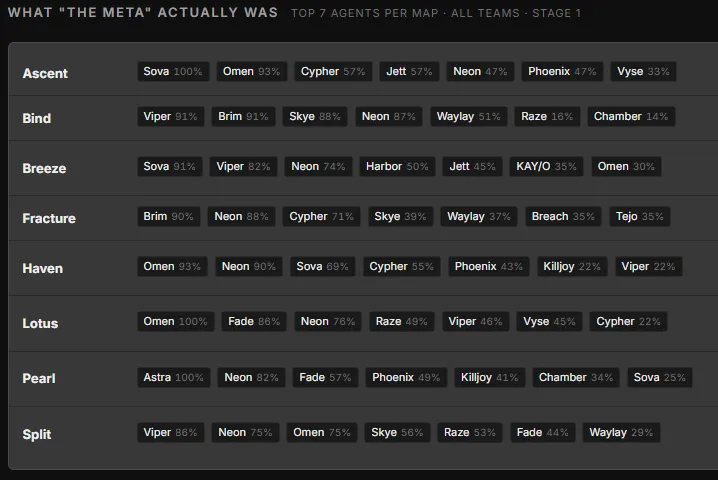
As the dust begins to settle we will usually see most teams coalesce around 7-10 agreed upon Agents that make up the core "meta". We watch as struggling teams start to map their compositions closer and closer to what their successful peers are playing. A few weeks into a season the discussion often switches from "what will teams be playing?" to "why aren't teams playing that?" Quickly, the perceived pool of "viable" Agents shrinks and pick rates rise on the anointed few.
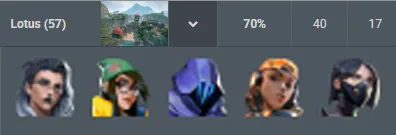
The problem is, every year we also seem to see a bit of a pattern. The teams that dominate their region or win global events often appear to be those that stray a bit from the beaten path and forge their own way on at least a map or two. We have comps called Fnatic Lotus, GENG Haven and EG Fracture for a reason.
This raises an important question... To meta or not to meta?
Here is what the data says from Stage 1.
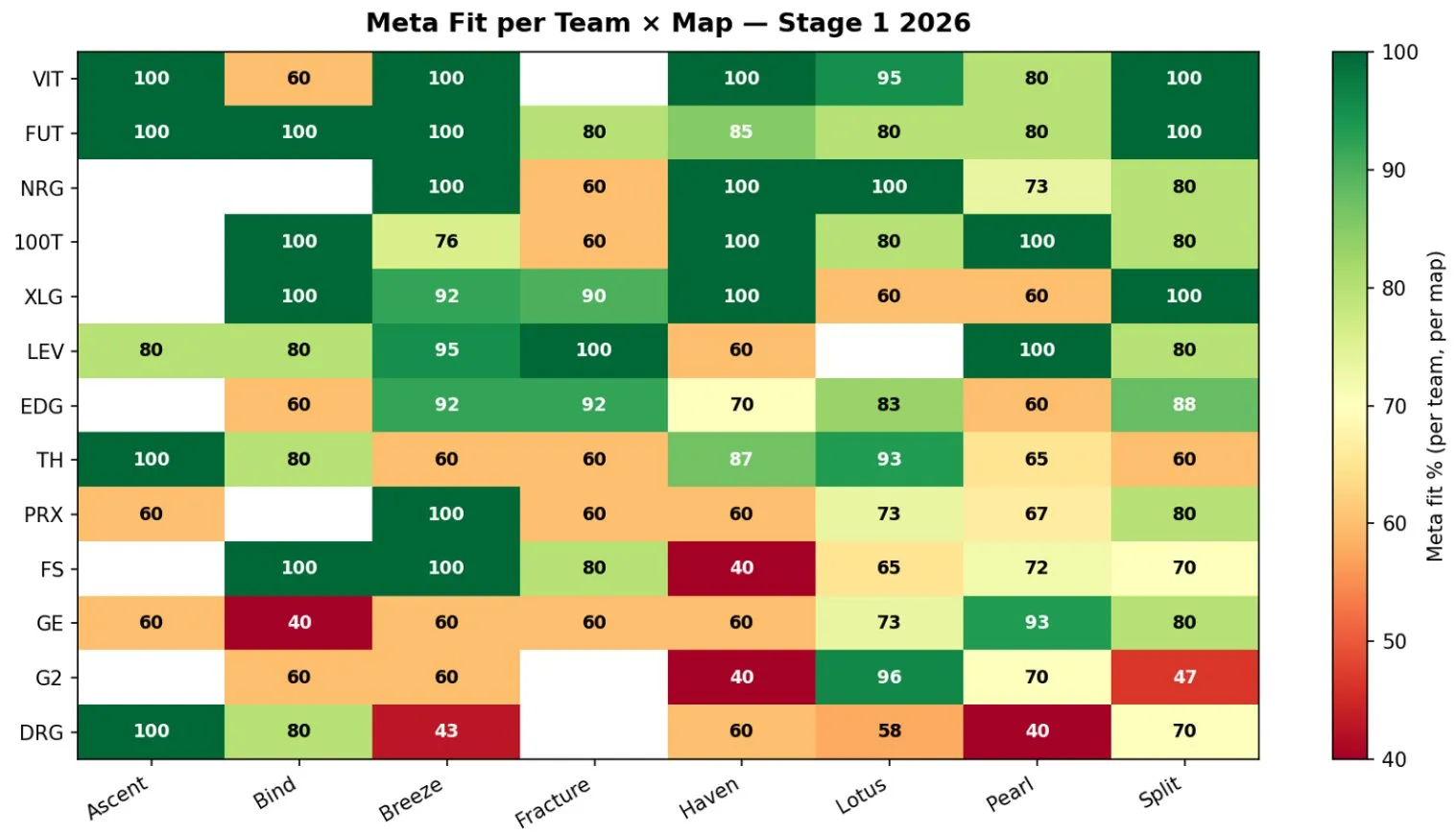
The first thing to figure out is how closely teams are following the meta. First we will define the meta as the 7 most popular agents played on each map globally. These are our Meta Agents. Then we look at which comps each team is running and what percentage of agents from those comps aligns with the meta agents. This determines our Meta Fit.
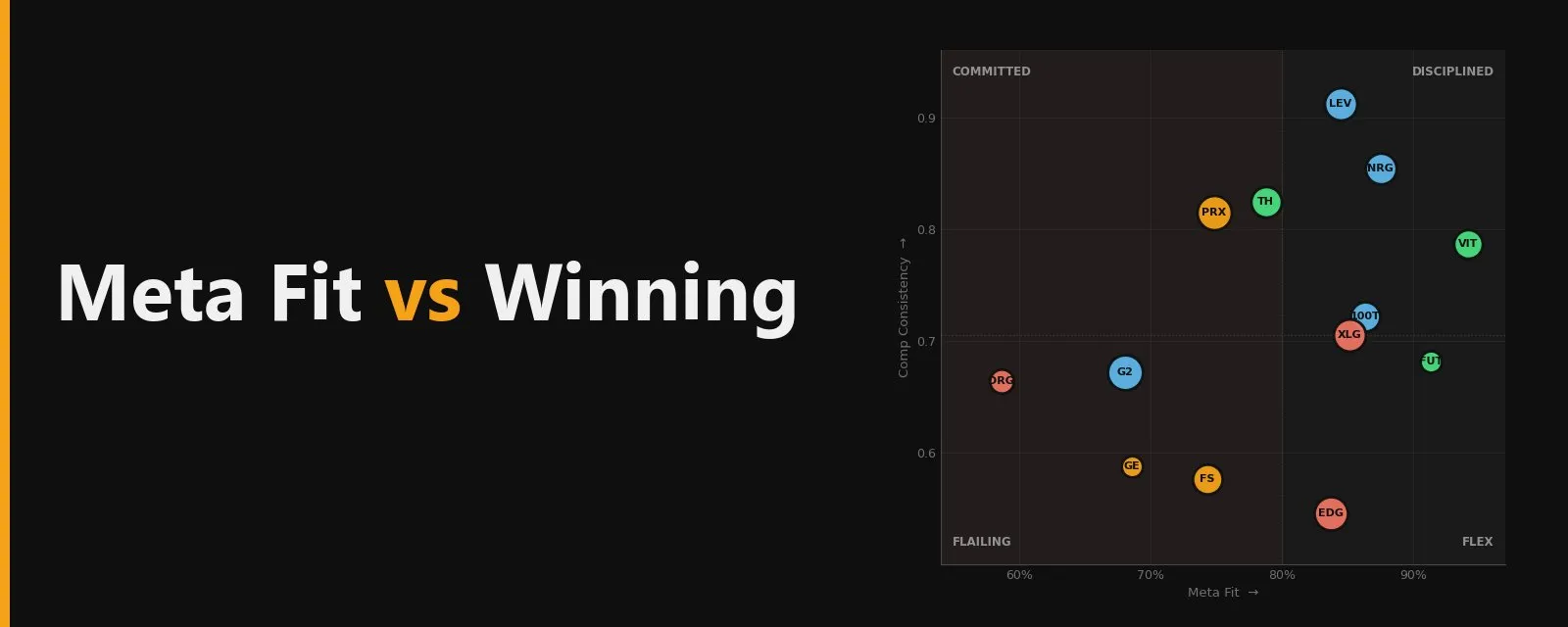
Using the top teams from each region allows us to see if there is any correlation between qualifying for Masters London and meta fit. Interestingly, we see that there is a pretty even split between teams that are heavy meta believers and those that are doing their own thing more often. Even more interesting is the regional comparison where there is a clear split between how different VCT leagues approach the game. Americas and EMEA's best teams tend to strictly follow the meta Agents while Pacific and China are more wildcards.
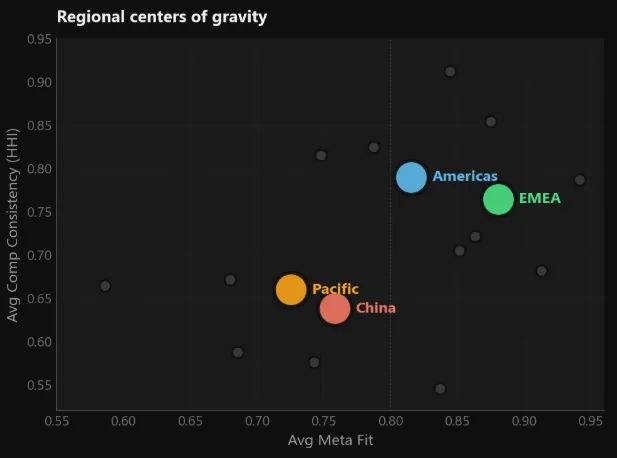
A small caveat about China is that they had a clean split between Group Stage and Playoffs so there was quite a bit of meta shift due to playing with a pre-nerf Waylay and then a post-nerf Waylay. EDG was actually pretty on-meta but swapped from one comp pre patch to another comp post patch on most maps. This lowered their comp consistency score. China also has the most unpredictable team of the lot (DRG) who pulls the average towards off-meta as well.
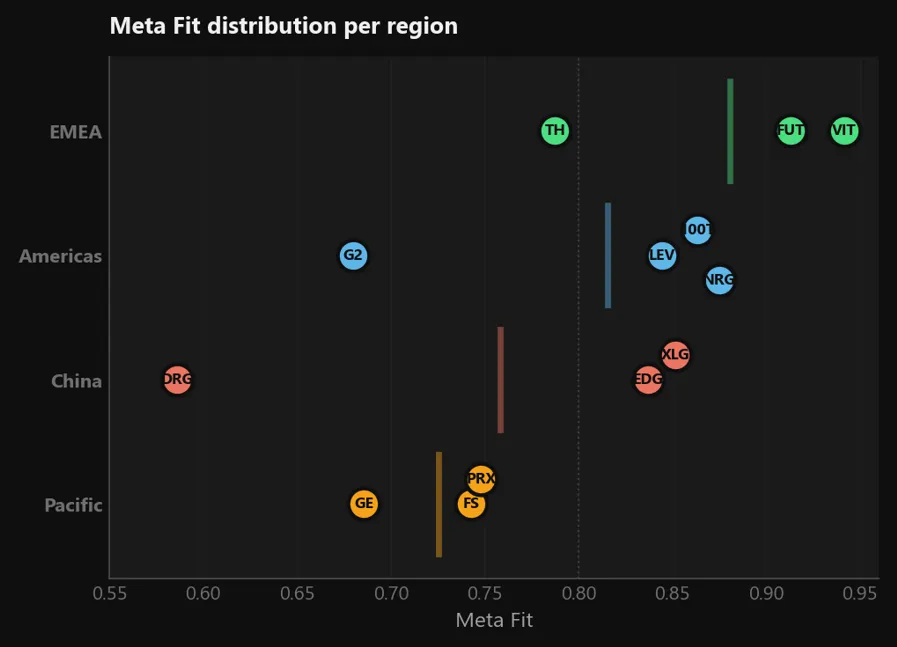
EDG won their league while playing mostly meta agents but doing a clean swap from one meta to the next between Group Stage and playoffs. Their ability to essentially reinvent all of their comps with some new Agents was quite impressive. PRX meanwhile won their league by pioneering their own way as usual. The Pacific region in general was quite volatile and PRX picked their lane and stuck to it (again some bias here because they won with their comps). In Americas, we still don't have the full picture but the clear outlier is G2 who came into Stage 1 with one idea, pivoted mid event to another and have begun smashing opponents since joining the rest of the region on the meta Agents. EMEA was one of the more interesting regions where Team Heretics reinvented themselves mid season and settled on a semi-meta, unique identity that earned them their first regional title.
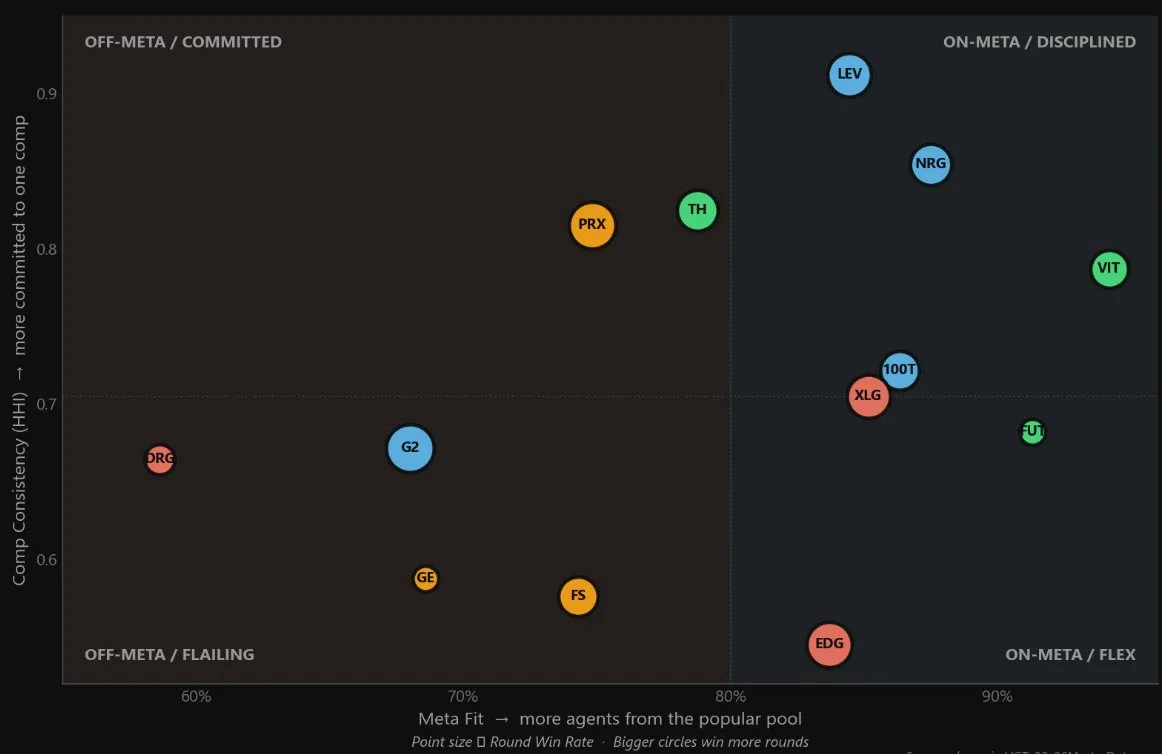
This is where our second metric comes in which is commitment to an identity. Consistency of a team's comps is a noisy data-point because usually teams that are winning won't be switching comps while teams that lose will be trying out new things. That being said, there are still some interesting observations. Heretics, despite being off-meta from their region were also the most consistent team in terms of their comps. Though there is heavy correlation with winning, it was clear as a viewer that as soon as they settled on who they wanted to be as a team their results immediately turned around.
Without dragging this out too much longer, the next step was to look longer term to see if there were any deeper patterns while trying to account for the winner's bias in comp consistency. Applying the same methodology to the entire VCT dataset since 2023 you end up with a plot that shows essentially no consistent correlation between being on meta fit and winning over the long term.
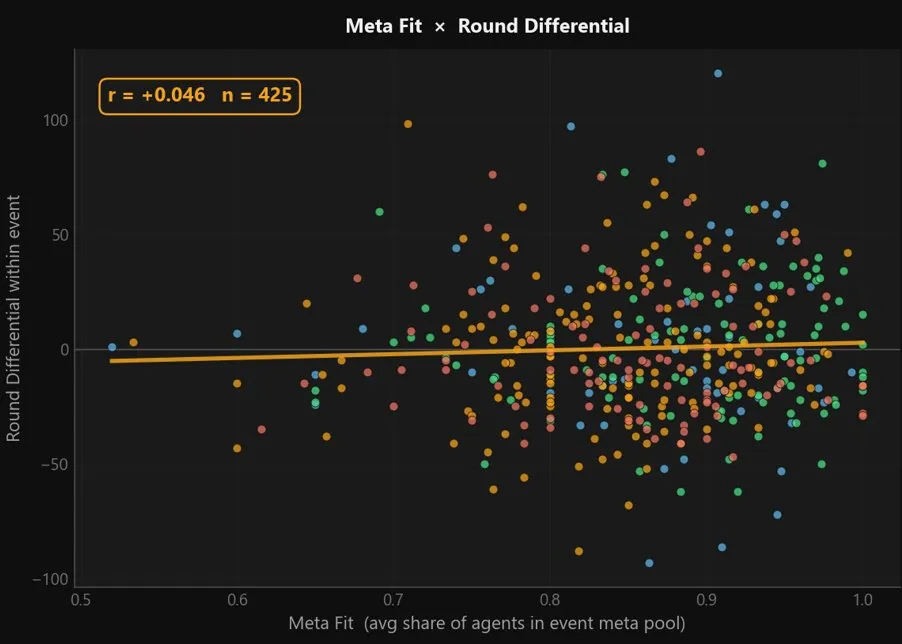
Some events the winning teams follow the meta and at other events the winners don't. What really stands out from all of this is that finding a team identity that fits the current meta is what really matters. You can play the meta and win, or you can play your style and win. The biggest mistake a team can make is trying to copy the meta, or deviating from the meta without the system and theory to support it.
Originally published as an article on X ↗, May 2026.